I, along with my co-directors, have the pleasure of inviting you to Save the Date for this special 10th edition of the Kidney Disease Clinical Trialists Workshop, which will take place in the Embassy of France in Washington DC on April 10-11, 2026.
The Kidney Disease Clinical Trialists (KDCT) Workshop is a high level think-tank, with an exceptional expert faculty. It involves a limited number of attendees (up to 130) and includes distinguished nephrologists, clinical trialists, principal investigators and statisticians from academia, R&D pharma and device companies, NIH, EMA, PMDA and FDA experts.
The KDCT Workshop aims to foster an international exchange of ideas where we will brainstorm on trial design, conduct, ethics, interpretation, approvability and implementation encompassing drugs, devices, biomarkers and therapeutic strategies for kidney disease.
Our objectives are to produce relevant data from controlled kidney disease clinical trials (beyond cardiovascular outcomes trials) that will contribute to better clinical care and to understand the problems associated with making decisions about what constitutes relevant information, how to improve kidney disease clinical trials, and, as is commonly the case, how to satisfy regulatory authorities and payers.
We will get in touch with you soon with a formal invitation to join us at the KDCT 2026.
The risk of cardiovascular complications is high in patients with chronic kidney disease. NGAL (neutrophil gelatinase-associated lipocalin)/lcn2 is involved in cardiac remodeling and inflammation and may play a role in the progression of cardiorenal syndrome.
The risk of cardiovascular complications is high in patients with chronic kidney disease. NGAL (neutrophil gelatinase-associated lipocalin)/lcn2 is involved in cardiac remodeling and inflammation and may play a role in the progression of cardiorenal syndrome. 🫀 🫘 Conducted in collaboration with INI-CRCT members Nicolas GIRERD,Jérémy Lagrange, Natalia Lopez and Frederic Jaisser, the authors of this study performed an analysis in wild-type rats and NGAL knockout rats after nephrectomy. 🫀 🫘 They demonstrated that cardiac perfusion was less impaired in NGAL knockout rats with chronic kidney disease than in wild-type rats. Left ventricular interstitial fibrosis was more severe in wild-type rats with chronic kidney disease than in control rats, but attenuated in NGAL knockout rats with chronic kidney disease. Levels of Gal-3, Col1 (collagen 1), Ccl2 (C-C motif chemokine ligand 2), and IL-6 (interleukin-6) were elevated in cardiac fibroblasts incubated with rNGAL. 🫀 🫘 The effects of rNGAL were attenuated by concomitant treatment with Gal-3 or Tlr4 inhibitors, suggesting that Gal-3 contributes to cardiac fibrosis and inflammation. 🫀 🫘 These experiments conclude that in rats with chronic kidney disease (CKD), NGAL was involved in cardiac remodeling via a Gal-3/Tlr4-dependent pathway, enhancing inflammation and fibrosis, and was correlated with cardiac events in the MEDIA-DHF and BIOSTAT-CHF cohorts. 🫀 🫘These experimental animal models leave prospects for the use of biomarkers with cardio-renal trophism.
Lifetime benefits of comprehensive medical therapy in heart failure with mildly reduced or preserved ejection fraction
This week, we would like to present the article: « Lifetime benefits of comprehensive medical therapy in heart failure with mildly reduced or preserved ejection fraction », recently published in Nature Medicine and co-authored with one of our Advisory Board members Faiez Zannad. ❤️ Individual improvement in events related to heart failure (HF) with mildly reduced (HFmrEF) or preserved ejection fraction (HFpEF) has been demonstrated with the use of sodium-glucose cotransporter 2 inhibitors (SGLT2i) and the nonsteroidal mineralocorticoid receptor antagonist (nsMRA) finerenone. In addition, in patients with HF, the use of an angiotensin and neprilysin receptor inhibitor (ARNI) improves these outcomes. ❤️ However, the question posed by the authors of this paper is whether there is an expected benefit from the combined use of these agents in the long-term treatment of HFmrEF)/HFpEF. ❤️ The DELIVER, FINEARTS-HF, and PARAGON-HF trials have provided comprehensive data on HF, and cross-analysis of the combined use of treatments shows that the combination of SGLT2i and nsMRA reduces the risk of CV death or first HF worsening by 31% in the overall population, while the combined use of SGLT2i, nsMRA, and ARNI reduces the risk by 39% in patients with HFmrEF)/HFpEF. ❤️ Therefore, long-term use of combined SGLT2i and nsMRA therapy in a 65-year-old patient with HFmrEF/HFpEF, or combined SGLT2i, nsMRA and ARNI in a 65-year-old patient with LVEF < 60% should result in long-term gains of 3.6 (2.0-5.2) or 4.9 (2.5-7.3) additional years without CV death or HF events, respectively. ❤️ It should be noted that combination therapy is expected to result in significant gains in event-free survival across a wide age range, from 55 to 85 years of age, which is a considerable advance, as are the potential long-term cumulative effects of early combination medical therapy with SGLT2i and nsMRA (and ARNI in some individuals) in patients with HFmrEF)/HFpEF.
⛈️❄️This week, we would like to highlight an article in which several members of our network played key roles entitled « The Impact of Meteorological Variables on Heart Failure Hospitalizations » published in JACC Advances by Stefano Coiro, Claire Lacomblez, Guillaume BaudryFrancois Roubille, Oren Caspi, Luca Monzo, Kevin Duarte, Tahar Chouihed, MD, PhD, and Nicolas GIRERD. 🌨️ 🌤️ 🌡️Indeed, the increased risk of hospitalizations for heart failure (HF) during cold weather is well known. 🌡️However, a wide range of meteorological variables and exposure periods may be taken into account. 🌡️This original study examined not only the effect of temperature, but also relative humidity, atmospheric pressure, and precipitation during different exposure periods. 🌡️This is a retrospective analysis of 4,512 patients admitted for acute dyspnea and diagnosed with acute HF in the emergency department of Nancy University Hospital (2010-2022 as part of the PARADISE study (Pathway of Dyspneic patients in Emergency). 🌡️A calculation of averages was performed for different periods prior to admission to the emergency department. 🌡️Multivariate Poisson regression showed an inverse association between temperature and hospitalizations for heart failure across all periods (incidence rate ratio [IRR] ∼0.90 for each 5°C increase; all P < 0.001) was demonstrated with multivariate Poisson regression. 🌡️This was compounded by an increase in precipitation over a week or a month (IRR for 5 mm = 1.11 and 1.18, respectively; P < 0.035 in both cases) and an increase in atmospheric pressure over a month (IRR for 5 hPa = 1.06; P = 0.003). 🌡️This paper concludes that temperature is independently associated with hospitalizations for heart failure, but the risk increases up to one week of exposure, allowing events related to heart failure to be predicted over this period. The full article is available with open access here: https://www.jacc.org/doi/10.1016/j.jacadv.2025.102359
The KDIGO 2026Clinical Practice Guideline for Anemia in Chronic Kidney Disease (CKD) provides updated, evidence-based recommendations and practice points to support the diagnosis, evaluation, and management of anemia in adults and children with chronic kidney disease (CKD), including individuals treated with dialysis or kidney transplantation. This guideline updates the KDIGO 2012 Anemia in CKD Guideline and reflects more than a decade of new evidence in anemia pathophysiology and treatment. The guideline was co-chaired by Jodie Babitt, MD (United States), and Marcello Tonelli, MD, SM, MSc, FRCPC (Canada).
Anemia is a common and burdensome complication of CKD, associated with reduced quality of life, increased cardiovascular risk, and a greater reliance on red blood cell transfusions. The updated guideline reflects advances in the understanding of anemia pathophysiology and treatment, and offers practical guidance across the full spectrum of CKD stages and care settings.
The KDIGO 2026 Anemia in CKD Guideline was developed using a rigorous and transparent methodology, including systematic reviews of the evidence and formal assessment of certainty using the GRADE approach. In addition to graded recommendations, the guideline includes population-based treatment algorithms and practice points designed to support consistent, evidence-informed anemia care across diverse healthcare systems, resource settings, and patient populations worldwide.
Excited to announce our new analysis from the Phase 3 PRECISION study is now published in Hypertension, a journal of the American Heart Association.
As an author and a PRECISION investigator, I’m proud to share this comprehensive analysis evaluating the efficacy and safety of a novel treatment in patients with chronic kidney disease and confirmed resistant hypertension.
Key highlights: 1. Robust evidence supporting blood pressure management in a population with high cardiovascular risk. 2. Safety profile consistent with the Phase 3 PRECISION study. 3. Potential implications for clinical practice in managing resistant hypertension among CKD patients.
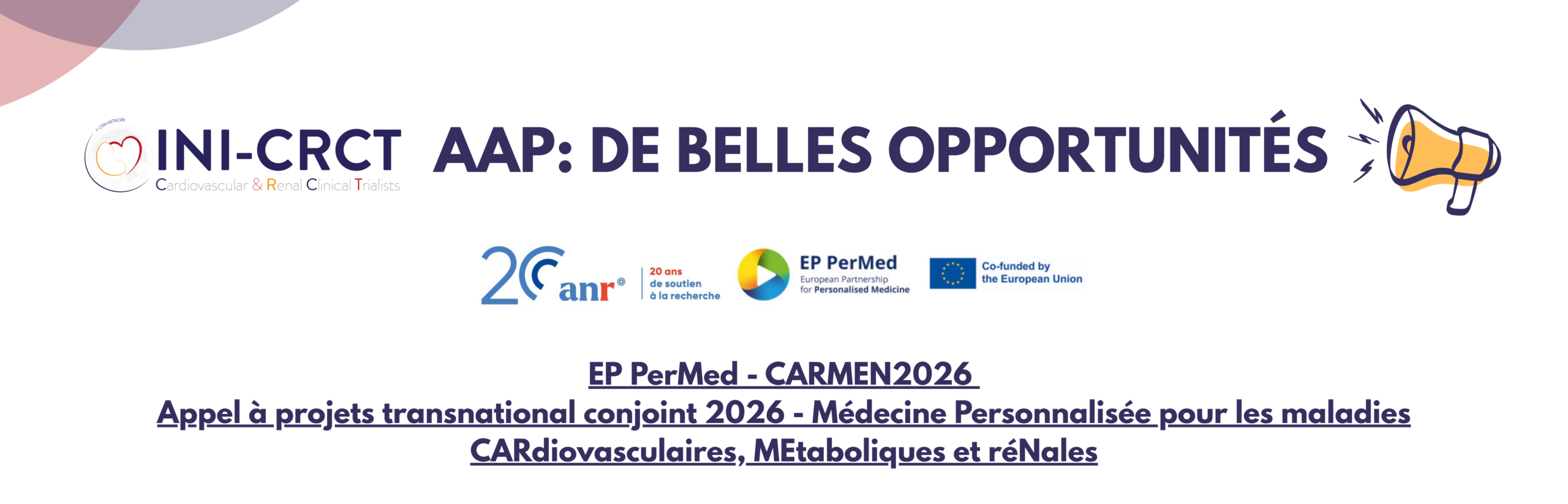
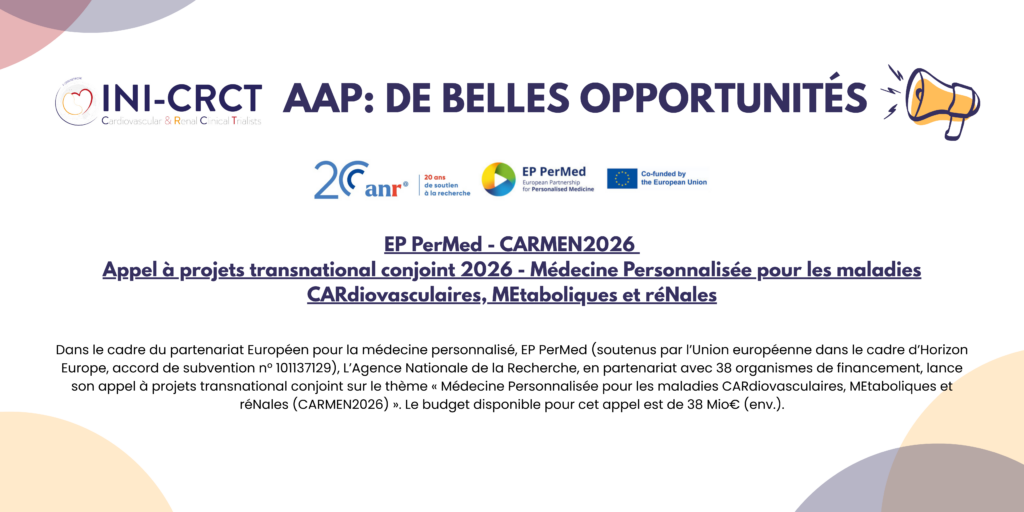
EP PerMed – CARMEN2026 – Appel à projets transnational conjoint 2026 – Médecine Personnalisée pour les maladies CARdiovasculaires, MEtaboliques et réNales
Dans le cadre du partenariat Européen pour la médecine personnalisé, EP PerMed (soutenus par l’Union européenne dans le cadre d’Horizon Europe, accord de subvention n° 101137129), L’Agence Nationale de la Recherche, en partenariat avec 38 organismes de financement, lance son appel à projets transnational conjoint sur le thème « Médecine Personnalisée pour les maladies CARdiovasculaires, MEtaboliques et réNales (CARMEN2026) ». Le budget disponible pour cet appel est de 38 Mio€ (env.).
Les pays suivants (27) participent à la préparation de l’appel : Afrique du Sud, Allemagne, Autriche, Belgique, Danemark, Espagne, Estonie, Finlande, France, Grèce, Hongrie, Islande, Israël, Irlande, Italie, Lettonie, Lituanie, Luxembourg, Norvège, Pays-Bas, Pologne, Portugal, République Tchèque, République Slovaque, Roumanie, Suède, et Turquie. Quatre des pays participants sont représentés par leur régions respectives (9) : Flandre (Belgique), Fédération Wallonie- Bruxelles (Belgique), Lombardie (Italie), Toscane (Italie), Açores (Portugal), Région Centre (Portugal), Andalousie (Spain), Catalogne (Espagne) et Navarre (Espagne).
Par cet appel, EP PerMed financera des projets de recherche en santé humaine portant sur des stratégies innovantes de médecine personnalisée pour les patients atteints de maladies cardiovasculaires, métaboliques ou rénales. Les projets de recherche peuvent se concentrer sur une seule maladie ou explorer ces affections en combinaison.
Les projets de recherche devront aborder un ou plusieurs des aspects suivants :
Le développement et la validation d’approches thérapeutiques personnalisées et innovantes pour le traitement de maladies cardiovasculaires, métaboliques ou rénales, et qui seront testées dans des modèles précliniques (ex : culture de cellules humaines, organoïdes, organes-sur-puce, modèles animaux spécifiques, modèles in-silico).
L’identification et la validation de marqueurs ou signatures moléculaires, ainsi que de technologies de pointe, permettant de déterminer le dosage optimal des traitements, d’en suivre l’efficacité ou d’évaluer le risque d’effets indésirables, afin de personnaliser le parcours de soins, y compris dans le cadre de traitements combinés, des patients atteints de maladies cardiovasculaires, métaboliques ou rénales.
L’identification et la validation de marqueurs ou signatures moléculaire de stratification, ainsi que de technologies de pointe de stratification, afin de développer des méthodes diagnostiques permettant de prédire et prévenir les comorbidités chez les patients atteints de maladies cardiovasculaires, métaboliques et rénales, et ainsi retarder la progression vers un syndrome cardiovasculaire-rénal-métabolique.
Dans le cadre de cet appel, bien que la recherche clinique puisse être financée, les essais cliniques de grande envergure ne sont pas éligibles. Les études cliniques proposées doivent être réalisables et pouvoir être menées à bien dans les délais et le budget prévus par cet appel.
Seuls les projets transnationaux seront financés.
L’ANR financera les partenaires français des projets sélectionnés. En respect avec les engagements de l’ANR, les participants s’engagent à déposer leurs publications au sein d’archives ouvertes, et à respecter le protocole de Nagoya concernant l’utilisation des ressources génétiques.
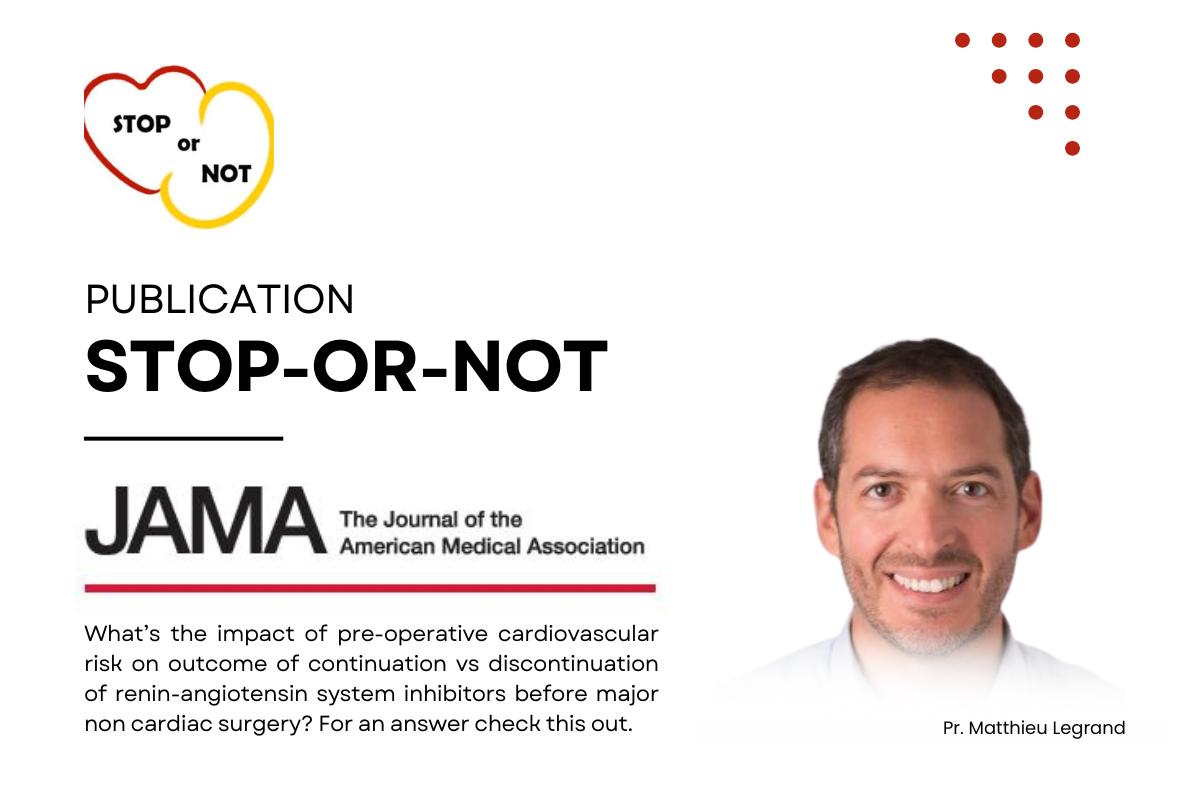
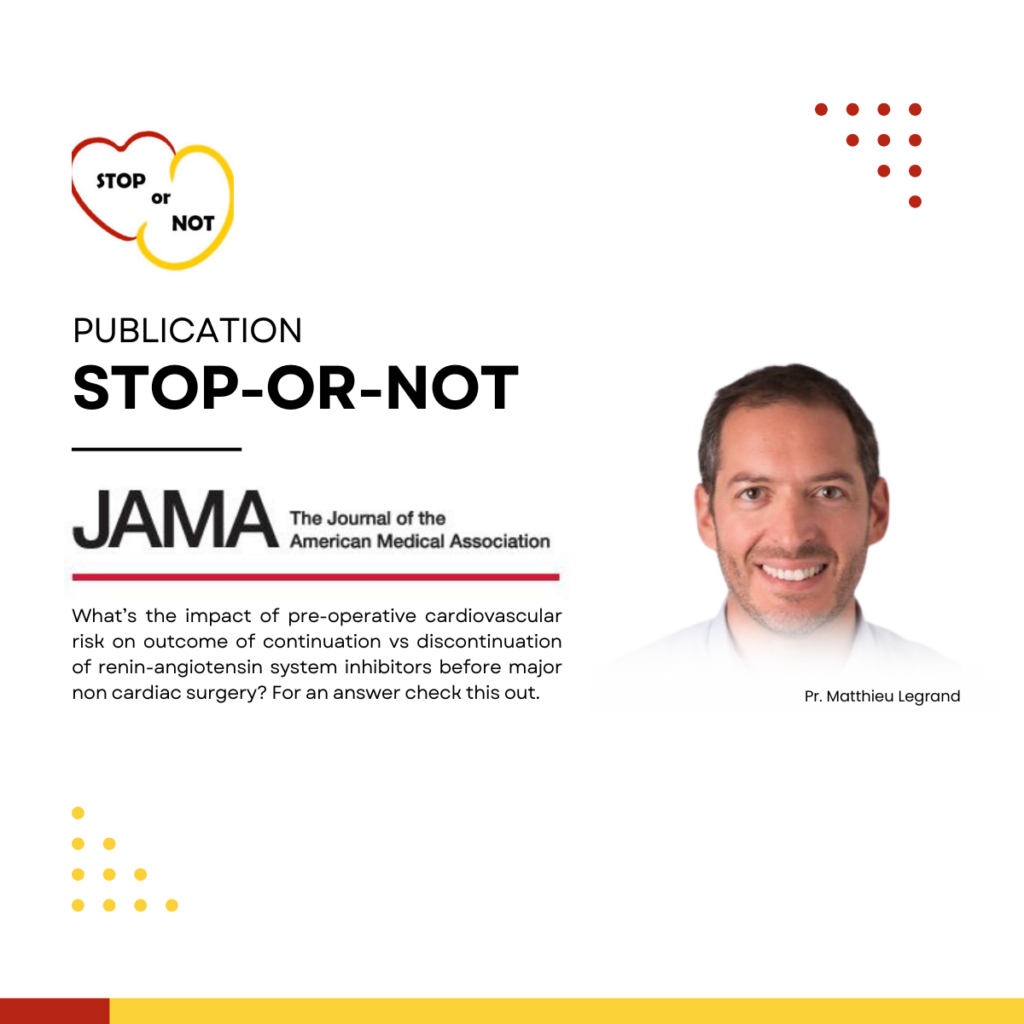
Continuation vs Discontinuation of Renin-Angiotensin System Inhibitors Before Major Noncardiac SurgeryThe Stop-or-Not Randomized Clinical Trial
What’s the impact of pre-operative cardiovascular risk on outcome of continuation vs discontinuation of renin-angiotensin system inhibitors before major non cardiac surgery? For an answer check this out.
🔬 Now Hiring: Postdoctoral Researcher in Cardiovascular Systems Biology (Nancy, France) We are looking for a Postdoctoral Researcher (24 months) to join Clinical Investigation Center CIC-P 1433 / Inserm UMR_S 1116 (DCAC) in Nancy, France.
🎯 Project focus: Endothelial glycocalyx alterations in HFpEF, using biomarkers, proteomics, multimodal data integration, and machine learning. The position is part of the EGAL-HF project, an ANR-funded program at the crossroads of cardiology, systems biology, and AI.
🛠️ You will work on: • Integrating large clinical & omics datasets (STANISLAS, HOMAGE, ALDO-DHF, MEDIA-DHF) • Modeling biological networks & HFpEF mechanisms • Evaluating preventive therapeutic strategies (MRAs) • Developing an integrated risk-stratification model
👤 Profile: • PhD in a relevant field • Strong skills in bioinformatics / biostatistics / ML • Experience with R/Python/SAS and omics or clinical datasets • International experience is a plus
📍 Nancy, France 🗓️ Start: March 2026 | 📅 Duration: 24 months 💶 Salary: €2,895–3,287 gross/month ⏳ Deadline: 15 January 2025 📩 Apply / Contact:
Pour offrir les meilleures expériences, nous utilisons des technologies telles que les cookies pour stocker et/ou accéder aux informations des appareils. Le fait de consentir à ces technologies nous permettra de traiter des données telles que le comportement de navigation ou les ID uniques sur ce site. Le fait de ne pas consentir ou de retirer son consentement peut avoir un effet négatif sur certaines caractéristiques et fonctions.
Fonctionnel
Toujours activé
L’accès ou le stockage technique est strictement nécessaire dans la finalité d’intérêt légitime de permettre l’utilisation d’un service spécifique explicitement demandé par l’abonné ou l’utilisateur, ou dans le seul but d’effectuer la transmission d’une communication sur un réseau de communications électroniques.
Préférences
L’accès ou le stockage technique est nécessaire dans la finalité d’intérêt légitime de stocker des préférences qui ne sont pas demandées par l’abonné ou l’internaute.
Statistiques
Le stockage ou l’accès technique qui est utilisé exclusivement à des fins statistiques.Le stockage ou l’accès technique qui est utilisé exclusivement dans des finalités statistiques anonymes. En l’absence d’une assignation à comparaître, d’une conformité volontaire de la part de votre fournisseur d’accès à internet ou d’enregistrements supplémentaires provenant d’une tierce partie, les informations stockées ou extraites à cette seule fin ne peuvent généralement pas être utilisées pour vous identifier.
Marketing
L’accès ou le stockage technique est nécessaire pour créer des profils d’internautes afin d’envoyer des publicités, ou pour suivre l’utilisateur sur un site web ou sur plusieurs sites web ayant des finalités marketing similaires.